Pressure washing your deck: what each surface can handle before winter
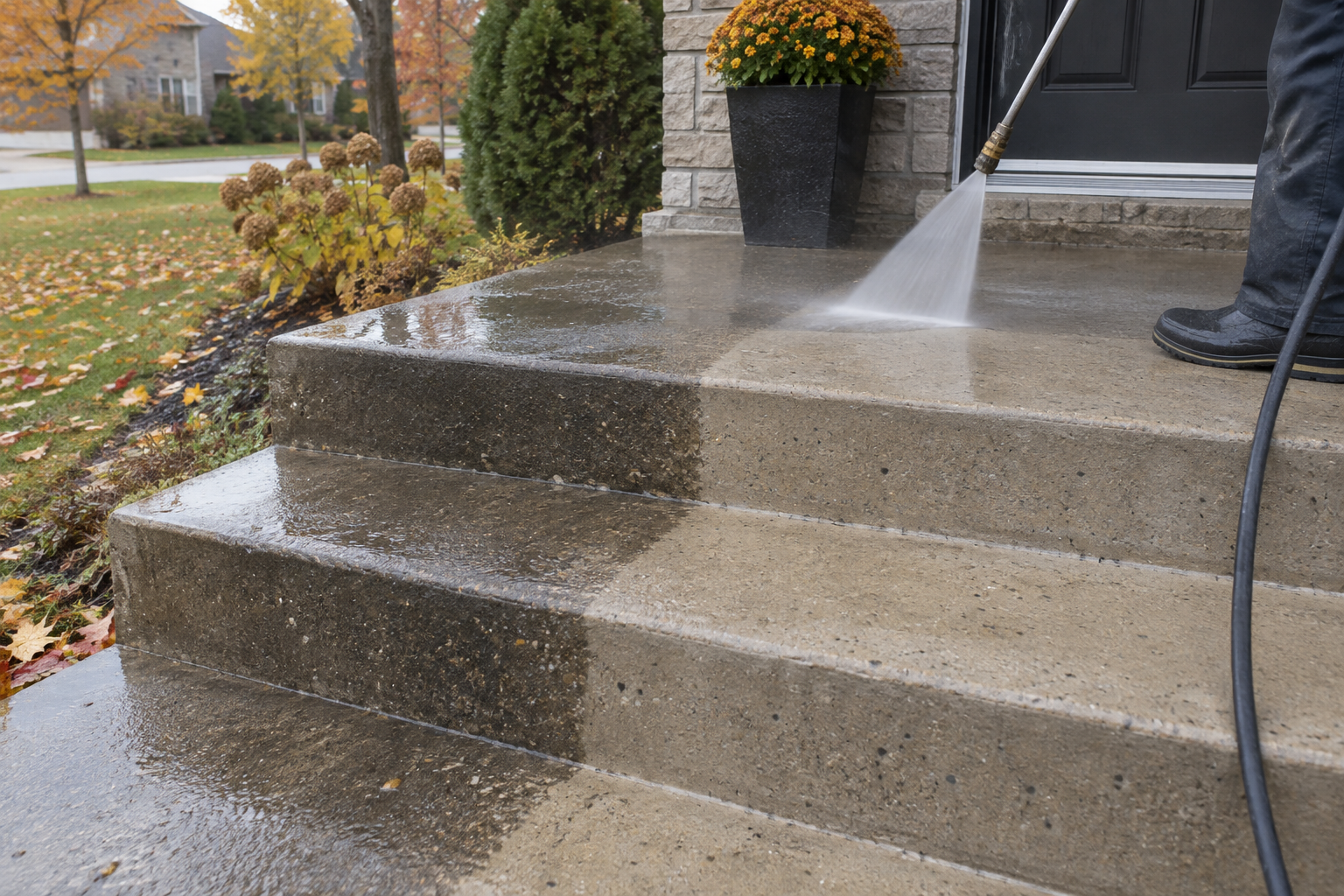
Successful deck pressure washing depends on matching the pressure to the material, not the level of grime. Wood and composite require a gentle spray and a cleaning agent; concrete can handle more pressure but is sensitive to de-icing salts; and fiberglass should be washed at low pressure.
Key points
- Pressure should be adjusted according to the material. Stubborn dirt does not justify using a stronger spray on a delicate surface.
- Wood: gentle spray and sodium percarbonate cleaner. Bleach artificially whitens wood and causes the fibers to fray.
- Composite: wide nozzle, gentle spray, and keep the nozzle at a distance from the surface. A concentrated spray can leave permanent marks.
- Concrete: more tolerant, but sensitive to de-icing salts. Clean, healthy concrete is more resistant to freeze-thaw cycles.
- Fiberglass: low pressure. Mineral deposits should be removed using the right technique, not brute force.
- Never mix bleach with ammonia or vinegar. Mixing these can produce toxic gases.
Why you should pressure wash your deck in the fall
Fall is the ideal time because organic debris settles before winter and remains trapped under the snow. Leaves, moss, and dust trap moisture against the surface. This moisture promotes the growth of algae and mold, which make the deck slippery.
Freeze-thaw cycles worsen the situation, as water that penetrates porous materials freezes, expands, and stresses the surface. A clean deck dries faster and is less susceptible to these cycles.
Cleaning before winter also makes snow removal and spring maintenance easier. It helps preserve the deck lifespan, provided you don't damage it while cleaning. A poorly adjusted pressure washer causes more harm than the dirt it is meant to remove.
Wood decks: less pressure, more technique
On a wood deck, technique matters more than jet force. According to the USDA Forest Products Laboratory (Ross et al., 1998), pressure washing is the most common mechanical method used by contractors. It effectively removes dirt, mold, algae, and graying. However, excessive pressure can damage the wood surface .
Common mistakes on wood are well-documented by research, making them easy to avoid.
Bleach: avoid it
Chlorine-based products give wood an artificial whitish tone and cause the surface to fuzz by loosening small fibers. If not rinsed thoroughly, their residues also accelerate the graying of the wood. The laboratory also notes excessive peeling, especially on cedar. Some cleaners are so harsh they can even turn the wood surface into pulp.
Sodium percarbonate
A wood cleaner containing sodium percarbonate (oxygen bleach) removes dirt, mold, and graying. Oxalic acid, on the other hand, treats tannin and iron stains, particularly on cedar.
The section-by-section procedure
The 2007 NewsLine from the same laboratory describes a simple procedure:
- Apply the solution using a push broom or mop.
- Work in sections of no more than 200 sq. ft..
- Let it sit for about 15 minutes while keeping the surface wet.
- Rinse thoroughly with a garden hose for at least 10 minutes.
- Allow to dry for at least one day in the sun. Plan on 2 to 3 days before applying a finish.
This approach takes time, but it protects the wood grain. It helps maintain a wood deck over several seasons.
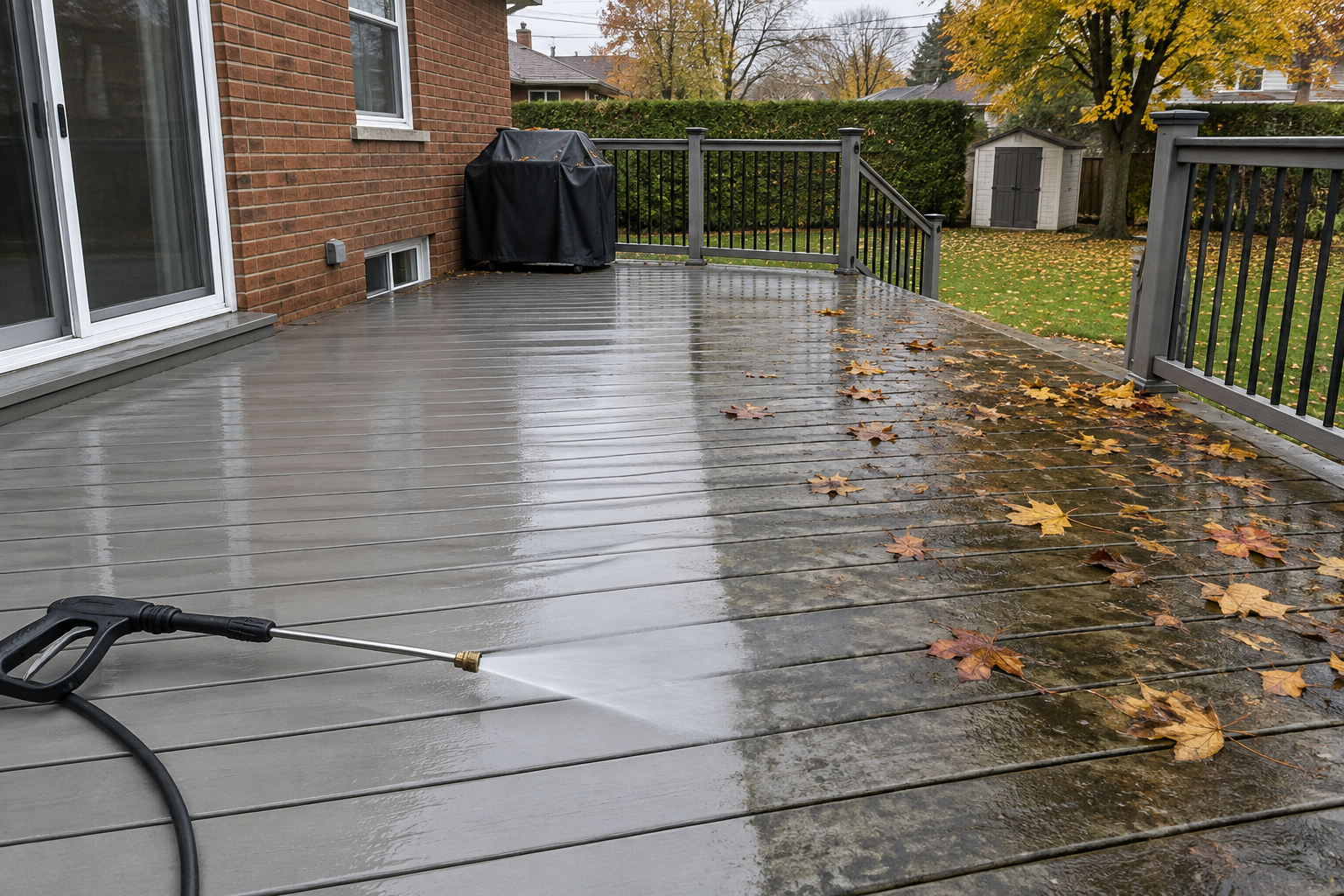
On composite, a wide, flat spray and a consistent distance prevent overlap marks.
Composite deck: a gentle, wide spray
Composite should be washed with a gentle, wide spray, keeping the nozzle at a safe distance. While the surface may look robust, it can be easily marked: a spray that is too concentrated or a nozzle held too close will leave visible streaks that are sometimes impossible to fix.
Start by sweeping away leaves and debris. Next, apply a diluted soap or a suitable cleaner, then scrub with a soft-bristled brush in the direction of the boards. The spray is primarily used to rinse off the solution and any dislodged dirt. Also, check the manufacturer's recommendations for your boards, as they vary from one product to another.
For a uniform result, wash in sections, maintaining the same motion and speed from one board to the next. Overlap marks appear primarily when the pressure changes while you are working.
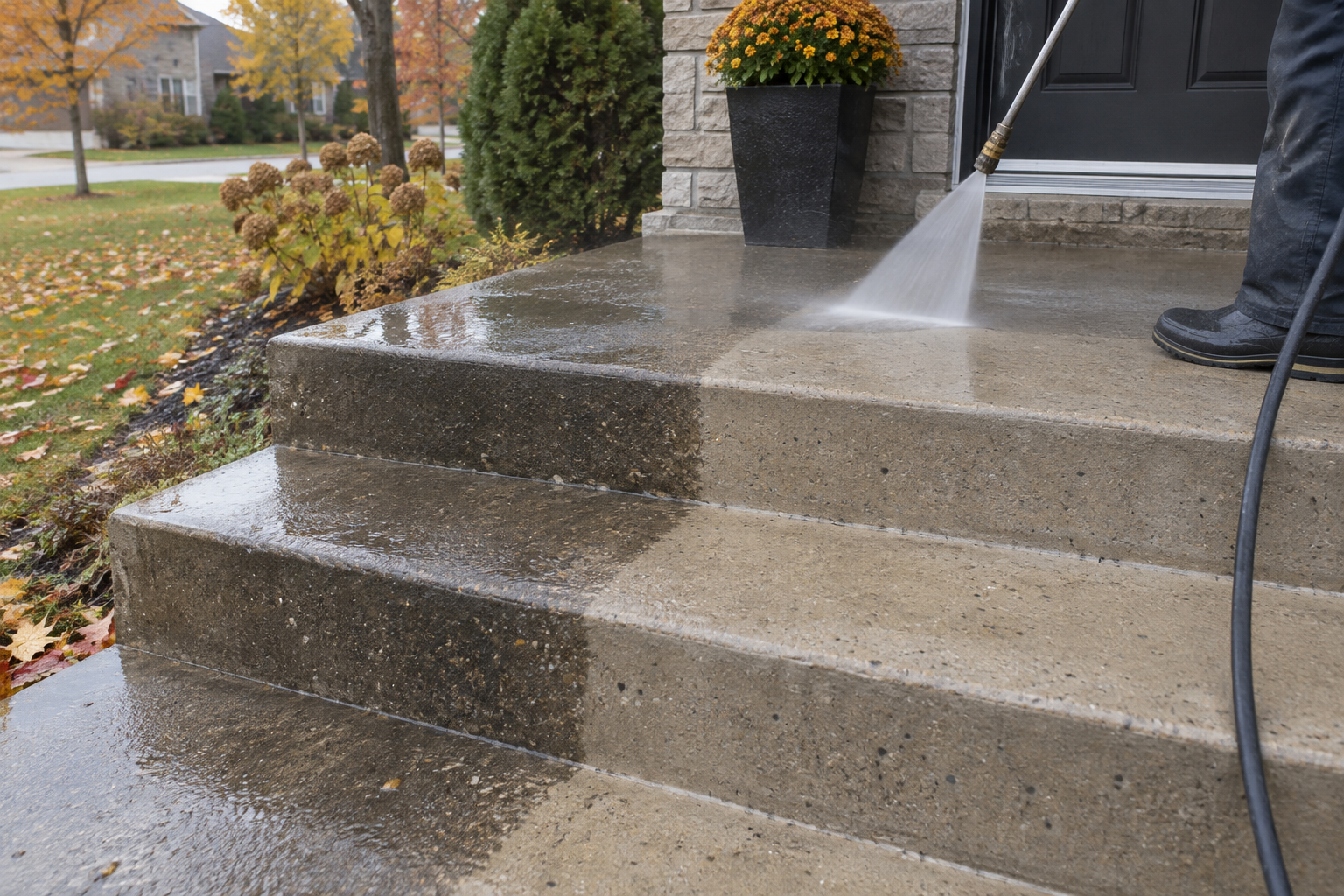
Clean concrete dries faster before the first frosts.
Concrete and stairs: controlled pressure and de-icing salts
Concrete can withstand more pressure than wood or composite, but it still requires a controlled spray. A jet that is too close or held in one spot can erode the cement paste and expose the aggregates. The surface then becomes rougher and traps more dirt.
Clean, sound concrete resists winter better. Without moss or deposits, water drains away faster and the surface dries more quickly. Cracks and weakened areas are also easier to spot before the frost expands them. Stairs deserve special attention: they are high-traffic areas, and a slippery buildup presents a real risk.
The mechanism of scaling
De-icing salts are among the causes of wear on outdoor concrete. According to a report by the Quebec Ministry of Transport (University of Sherbrooke, 2017), when concrete is exposed to these salts and the temperature drops, water freezes first in the larger pores. The remaining solution becomes concentrated with ions, which creates new pressure within the paste. This mechanism is linked to the scaling of surfaces exposed to both salt and frost.
Limiting salt during winter
Clear snow early and by shovel, then use de-icer sparingly, only in areas where safety requires it. Environment and Climate Change Canada regulates the use of road salts through a Code of Practice for the Environmental Management of Road Salts. Its management principles also apply to your driveway.
For concrete pool decks, the logic is the same. Our guide to pool decks details the specific characteristics of these surfaces.
Fiberglass: low pressure and mineral deposits
Fiberglass should be washed at low pressure. It is primarily found on balconies, landings, and stairs. Its finish protects the material, and high pressure can dull or wear it down.
Mineral deposits, such as limescale left by water or rust stains, do not always come off with a simple rinse. In these cases, choose a suitable product and let it sit, rather than increasing the pressure. The surface must then be rinsed thoroughly to ensure no residue is left behind that could attract dirt.
Elevated surfaces present a challenge: water must drain away without seeping under the edges. This constraint often makes a pre-work assessment necessary.
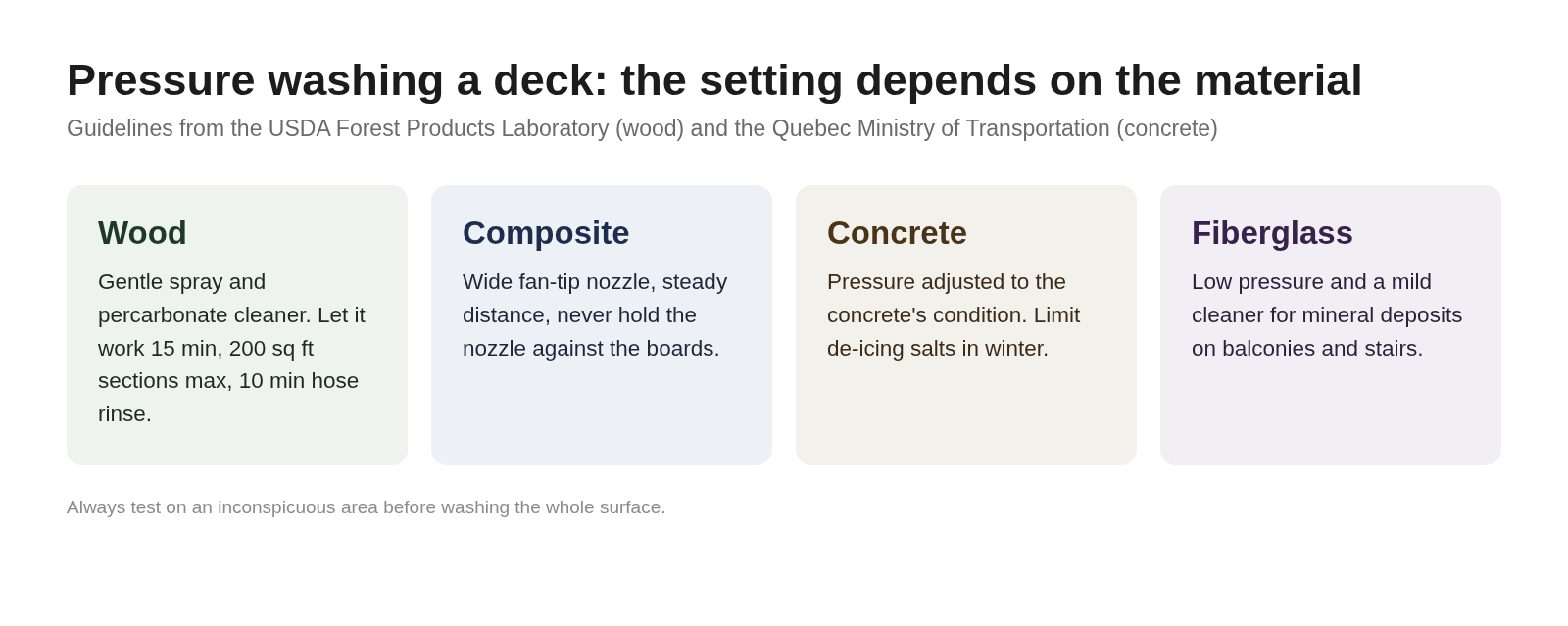
Adjust settings based on the material, not the level of grime.
Nozzle, distance, and spray: settings to prevent damage
Proper adjustment starts with the nozzle. Choose a wide fan nozzle, which distributes water over a larger area. Avoid concentrated spray nozzles on delicate surfaces: they cut rather than clean.
Next, maintain a constant distance. The closer the nozzle, the greater the force applied per square centimeter. Move in steady, slightly overlapping passes, following the grain of the material. A surface cleaner with a rotating disc helps achieve a uniform result on large concrete slabs.
Always test on an inconspicuous area before starting, then wait for the surface to dry to evaluate the result. Never point the spray at a person or animal: even a moderate jet can cause injury.
Our article on the hidden costs of DIY pressure washing covers the most common adjustment mistakes.
Cleaning products and mixtures to avoid
A mild product, applied correctly, is sufficient in most cases. For moss and algae, diluted soap or a cleaner suited to the material type often yields better results than a stronger spray. Read the label, respect the dwell time, and rinse thoroughly.
One safety point remains non-negotiable for every homeowner. Health Canada specifies that you must not never mix bleach with other chemicals, especially those containing ammonia or acids like vinegar. Mixing them can produce toxic gases, so rinse containers and equipment between products.
Also, protect nearby plants and surfaces. Wet the grass and hedges before application, then rinse them afterward.
When to hire a professional for cleaning
Leave the cleaning to a professional when the surface is fragile, elevated, or prone to damage. This applies to stairs and landings, pool decks, stubborn stains, and surfaces where you are unsure of the material composition.
Our controlled high-pressure ground surface cleaning service covers concrete, composite, and fiberglass decks. It also includes fiberglass stairs and landings, concrete pool decks, and stone or paver retaining walls. Our method consists of 4 steps : analysis and assessment, securing and preparation, controlled application, and final inspection. The pressure is adjusted according to the material.
You can view our deck and stair projects. If your pavers have turned black or green, also read our article on blackened or greenish pavers.
Request your free estimate. A real person will get back to you in less than 24 hours.
Frequently asked questions about pressure washing your deck

Complete refurbishment of pavers and joints
Deep cleaning, polymer sand removal, mechanical compaction and lasting stabilization.
Learn more about this service
Passionate about outdoor maintenance and attention to detail, she shares practical tips and effective methods for keeping your surfaces clean, durable, and well-maintained.
Are you seeing a similar situation?
Get a detailed evaluation adapted to the real configuration of your property.