


Complete refurbishment of pavers and joints
Specialized intervention aimed at restoring the stability, uniformity and lasting appearance of pavers and their joints.
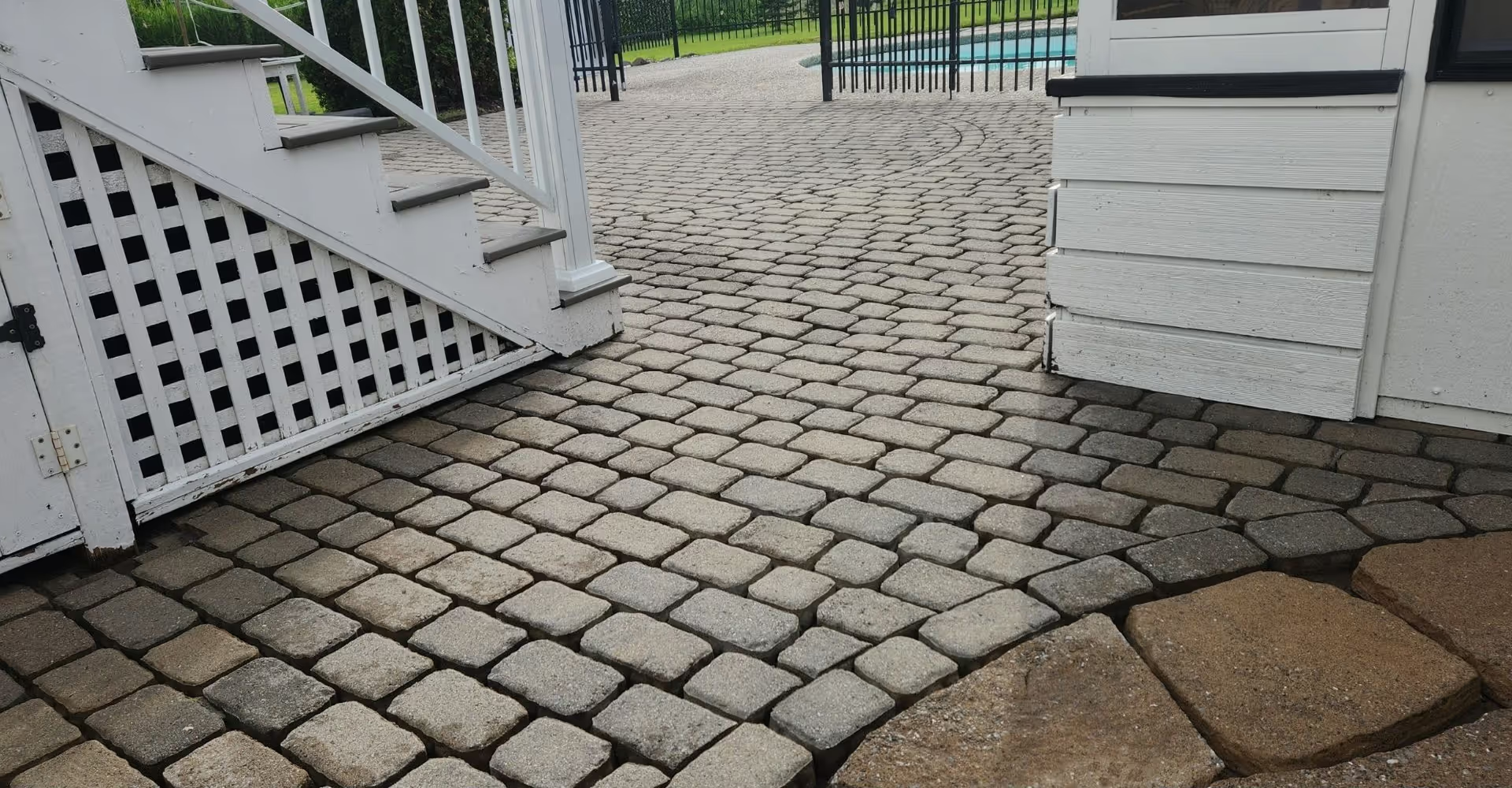
IS YOUR SITUATION SIMILAR?

WHAT OUR INTERVENTION INCLUDES
Each step is done carefully to avoid any dispersion of sand into flower beds, pools, adjacent surfaces, or neighboring properties.

Complete emptying of the joints
Removal of old polymer sand and complete evacuation of residues.
Specialty paver shampoo
Deep cleaning to remove stains and restore surface uniformity.
Spreading and compacting polymeric sand
Filling the joints and controlled vibration of the pavers.
Watering the joints
Deep wetting to activate the polymerization of the sand over its entire thickness.
Finish rinse
Final surface inspection for a clean and even finish.

WE WORK IN PARTICULAR FOR
Each material is evaluated before the intervention in order to adapt the method used.
AFTER INTERVENTION
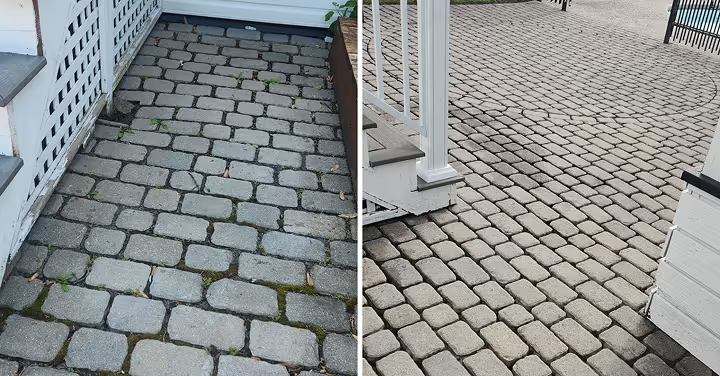
Degraded joints and dirty pavers → refurbishment
Complete cleaning and restoration of joints with polymeric sand.

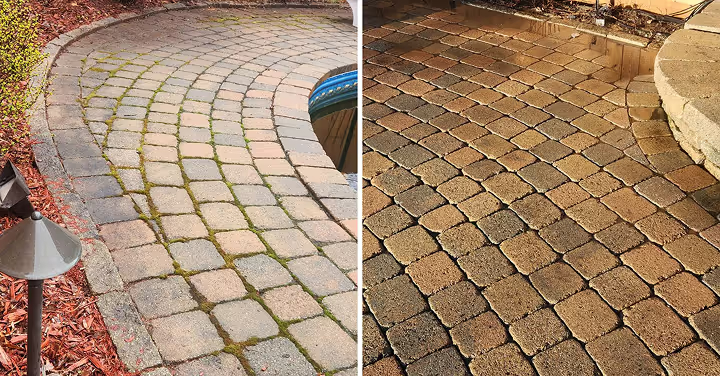
Presence of lichen and joint degradation → thorough cleaning and filling of joints
Restored and stabilized surface
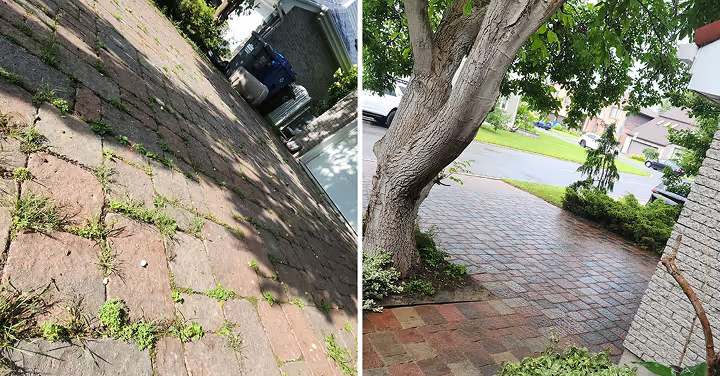
Weed-infested pavers → restored joints and a uniform surface
Deep cleaning and polymeric sand replacement.

%20(1).jpg)
.jpg)
.avif)
SOME CONFIGURATIONS REQUIRE AN ADAPTED APPROACH
Each paved layout has its own characteristics that influence the intervention method and the performance of polymer sand. Our approach is adjusted according to the technical parameters observed on site.
REAL INTERVENTIONS IN THE FIELD
These photos illustrate situations encountered during our interventions on residential and commercial developments.

Paved surface overgrown

Pavers invaded by mold

Cracked or eroded polymer sand

Pavers blackened by mold and deposits

Paved surface with open joints and emerging vegetation
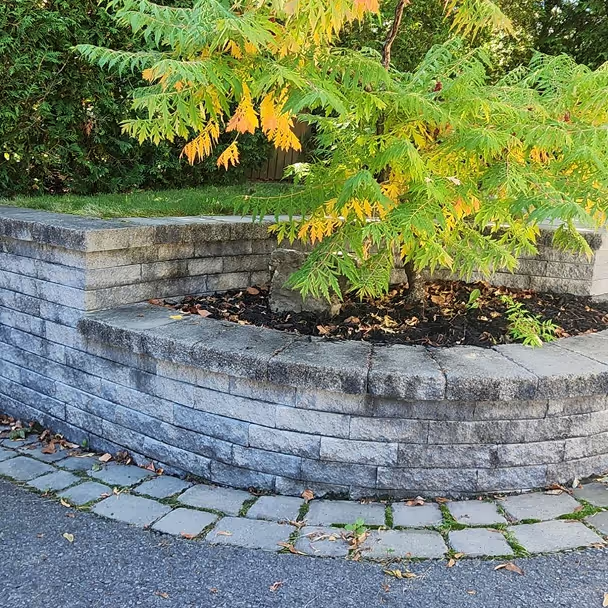
Darkened pavement wall with accumulation of organic deposits and fouled joints

Paved pool surround marked by organic deposits, blackened joints and encrusted stains

Pool surround made of fouled pavers with organic accumulation

Stairs made of dirty pavers with accumulation of organic deposits and altered joints

Overgrown paved driveway with bald joints and accumulation of organic debris

Paved surface with localized organic stains

Paved surface fouled with embedded organic deposits and blackened joints
%20encrass%C3%A9e%20avec%20joints%20envahis.avif)
Natural stone surface (flagstone) clogged with overgrown joints
Frequently asked questions
Find answers to the most common questions about our services and our approach.
When joints deteriorate or are poorly compacted, pavers can lose their cohesion. Instability can also be caused by nonexistent or improperly installed borders, an inadequate installation bed, or the presence of roots in the vicinity. Depending on the situation, upgrading and maintaining the joints can restore stability and uniformity to the layout.
Cracks, friable sand, or open joints often indicate polymer sand degradation. The replacement stabilizes the pavers and improves the appearance of the surface.
When the joints break down or the sand disappears, weeds can set in. An intervention makes it possible to clean the surface and restore the joints to stabilize the pavers.
Pavers exposed to humidity often accumulate mold and organic deposits. Cleaning revives the surface and restores a clean appearance to the facilities.
Ensure the stability and cleanliness of your paved surfaces.
An evaluation makes it possible to analyze the condition of the joints and to determine if a complete refurbishment is recommended.
