Exterior concrete cleaning: methods, stubborn stains, and winter preparation

Blackened, greenish, or slippery concrete is a sign of dirt buildup that accumulates with moisture. Cleaning outdoor concrete begins with identifying the type of dirt, followed by using the gentlest method that provides a uniform result without damaging the surface.
Key points
- Identify the dirt first : removing moss, grease, embedded dirt, or efflorescence requires different methods.
- Water and a mild cleaner are the first step to try on any concrete surface.
- Pressure must remain controlled : a jet that is too strong will mark the concrete and expose the aggregate.
- Vinegar is an acid and should never be mixed with bleach: the mixture releases toxic gases.
- Before winter and in the spring : remove leaves and organic matter in November, then rinse away de-icing salts in the spring.
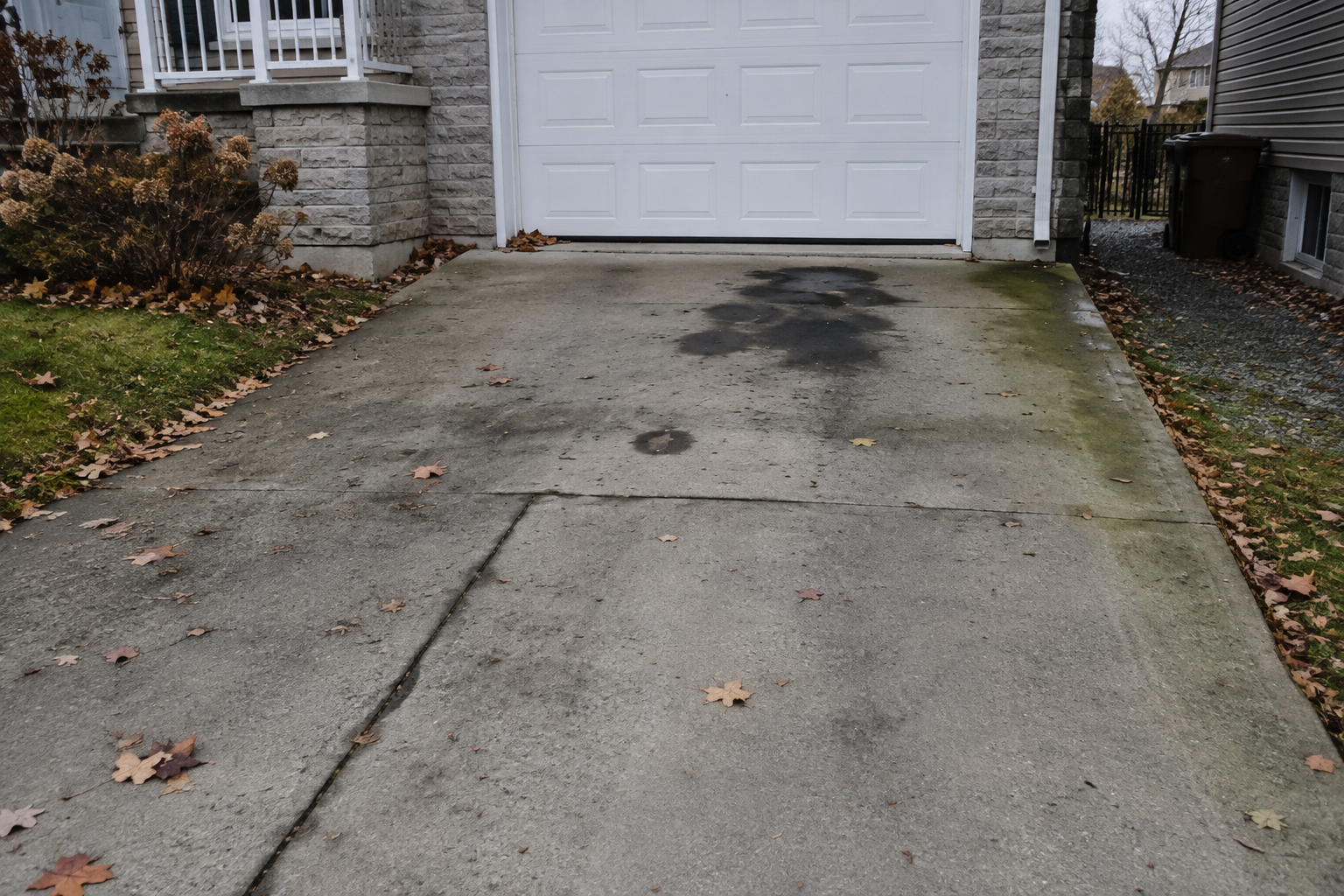
Oil stains and green deposits: two types of dirt that are not treated the same way.
Identify the dirt before choosing a method
Observe the surface before taking action. The color and texture of the stains indicate the cause and guide the choice of products and tools.
A green or black tint, often found in shaded areas, corresponds to moss and algae. A dark, shiny area near a parking spot suggests oil or grease. Uniform, dull dirt is ingrained dirt. A powdery white film is efflorescence.
Also note the type of structure and its finish. Decorative concrete (stamped or colored), painted surfaces, or epoxy coatings require more caution than a bare slab: always test a small, inconspicuous area first. If the concrete is cracked or crumbling, it should be repaired by a professional before any cleaning, as pressurized water will worsen the damage. The same rule applies to damaged decorative concrete.
The type of structure also matters: garage driveways, stairs, sidewalks, slabs, patios, or pool decks. Outdoor stairs become slippery after rain because moss, mold, and organic deposits reduce traction. This observation makes regular maintenance a matter of safety, not just appearance.
Start with water, a brush, and mild soap
The gentlest method is often enough. Wet the surface with a garden hose, apply a mild soap, and scrub with a stiff-bristled push broom.
Work in sections so the product does not dry on the concrete. This preparation prevents streaks. Scrub in the same direction to achieve a uniform result. Rinse with clean water, pushing the water toward a drainage point, not toward the house or flower beds.
This approach is suitable for patios, sidewalks, stone slabs, and lightly soiled surfaces. It preserves the integrity of the finish and serves as a baseline for comparison before resorting to more aggressive equipment.
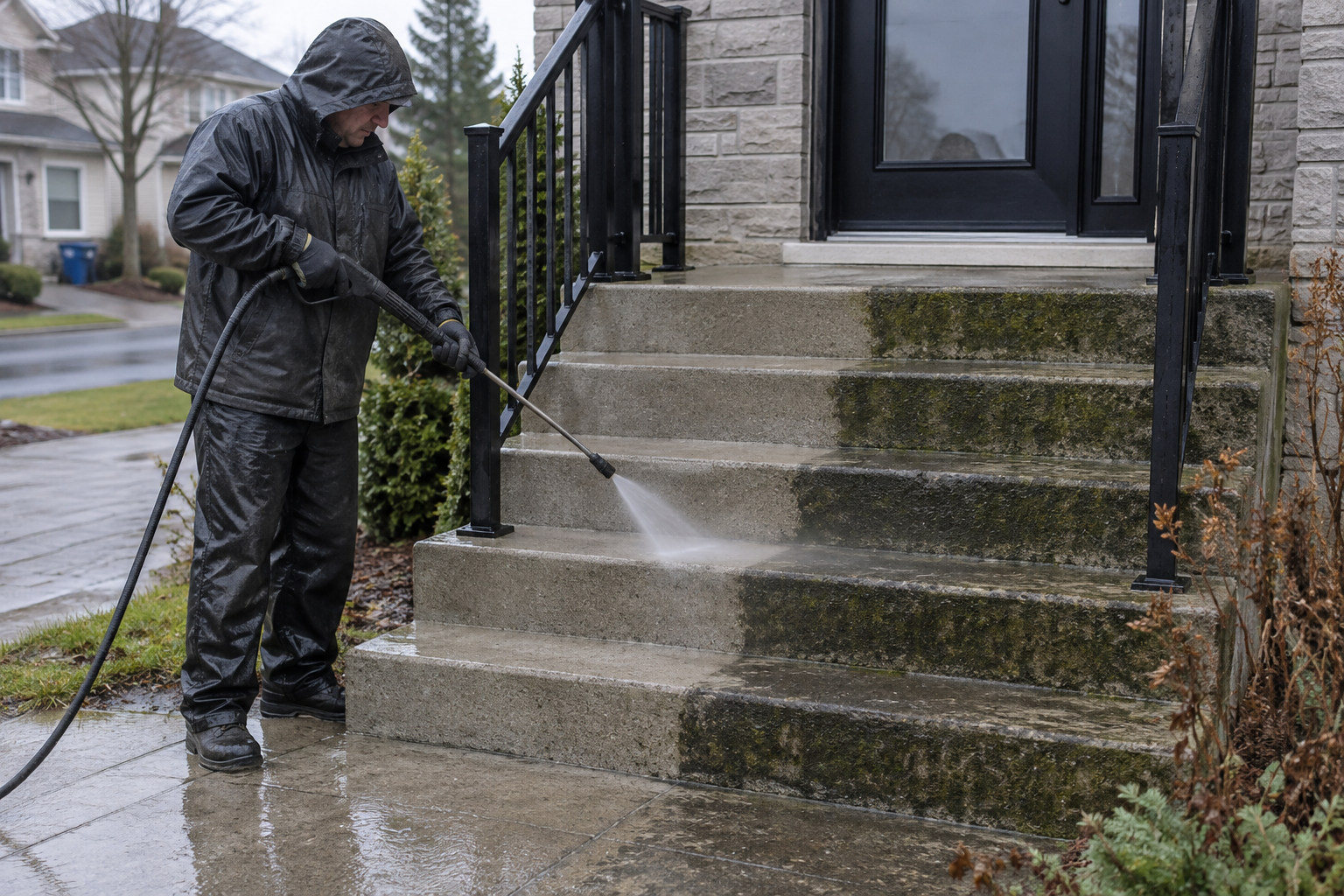
Fan spray, always in motion: keep the pressure appropriate for concrete.
Pressure washers: useful if pressure is controlled
A pressure washer is suitable for concrete provided the pressure is set to the minimum effective level. Use a fan nozzle and test on an inconspicuous area first.
Keep the spray in motion. Never hold the jet in one spot on the ground, as excessive pressure will etch the surface and expose the aggregate. A surface etched by the spray will retain those marks even after drying.
The controlled high-pressure washing of ground surfaces relies on this principle: adjusting the pressure to the material and its condition. For a patio, also check out our article on pressure patio cleaning.
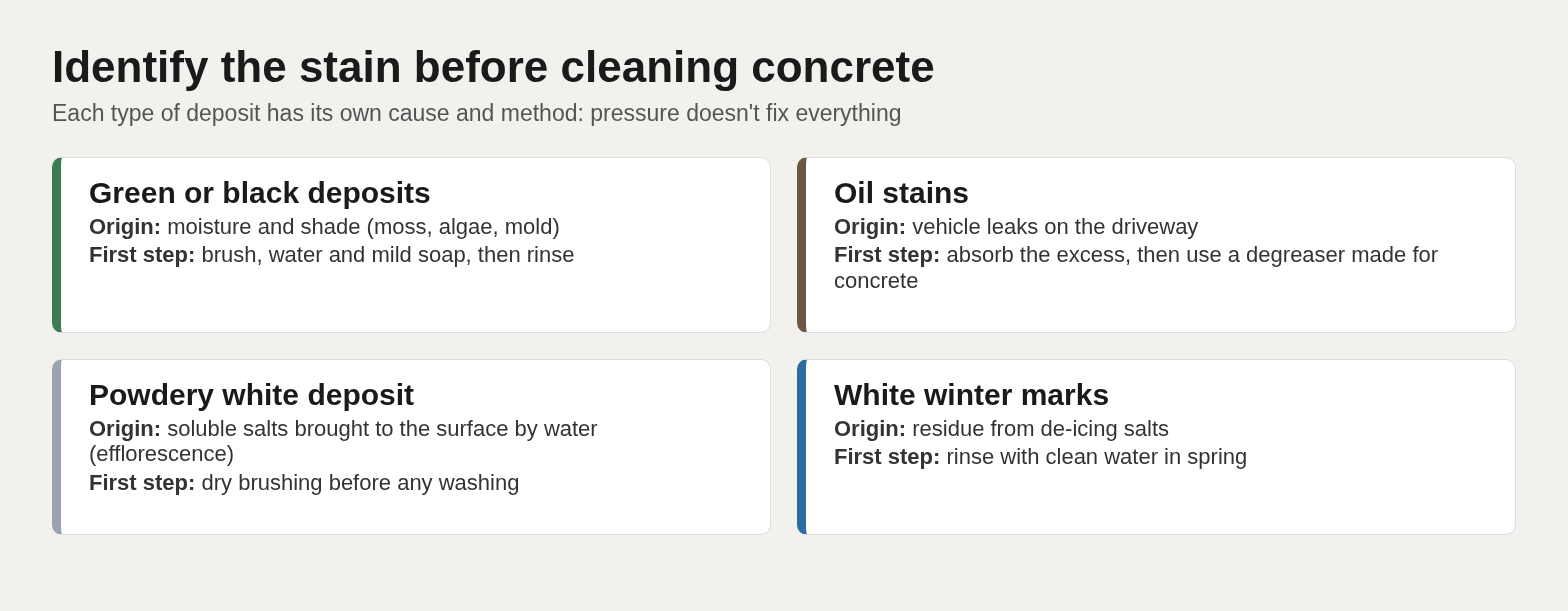
Every stain has its own cause and method.
Stubborn stains: oil, moss, and efflorescence
Each stain requires a specific treatment. Address stains one by one to remove them, rather than applying a single product to the entire surface.
Oil and grease
Absorb the excess with a dry material, then apply a degreasing cleaner suitable for concrete. Let it sit, scrub with a stiff-bristled tool, and rinse. An old stain has penetrated deep into the pores and may require several attempts. No treatment guarantees complete removal.
Moss and algae
Moss takes hold where moisture persists. Loosen it by scrubbing with a mild cleaner, then rinse. Algae will return to the same spots if the root cause isn't addressed. Reduce shade and leaf accumulation to limit regrowth.
White deposits (efflorescence)
A study by the National Bureau of Standards (now the American NIST) defines efflorescence as a deposit of crystallized salts on the surface. Soluble salts present in the material are dissolved by water, transported to the surface, and then redeposited when the water evaporates. Therefore, both soluble salts and water are required for it to appear. Dry brush, then rinse and look for the source of moisture feeding these deposits. These stains will return as long as water circulates through the material.
White vinegar, baking soda, and bleach: precautions
White vinegar and baking soda are natural solutions that can be used on small areas as a supplement to regular maintenance. Always test on a small, inconspicuous area and rinse thoroughly with water.
This acid can dull or damage the concrete surface if left in contact for too long. A baking soda paste helps scrub away light stains without the need for harsh chemicals.
According to Health Canada, never mix bleach with other cleaning products. When mixed with ammonia or an acid—even vinegar—it releases toxic gases (such as chloramine when mixed with ammonia). Read product labels, ensure proper ventilation, and wear safety goggles and rubber gloves. Used on its own, it can still irritate or burn the skin, eyes, and lungs.
Slabs, pavers, and solid concrete require different cleaning methods
Solid concrete can withstand more vigorous scrubbing and rinsing, as can certain stone surfaces. Concrete or stone slabs require extra care around the joints and edges.
Pavers have sand joints that can be dislodged by a high-pressure spray. Empty joints allow pavers to shift and encourage weed growth. For these surfaces, read our article on blackened or greenish pavers.
On a concrete patio, clean in sections and clear away furniture before you begin. Ensure that water drains away from the walls.
Preparing concrete for winter and rinsing it in the spring
In November, remove leaves and organic matter. They trap moisture against the surface and promote moss growth.
Then, check your downspouts. A downspout that discharges water onto the slab keeps it constantly damp and accelerates deterioration. Our article on clogged gutters details the checks to perform. Let the concrete dry before the first frosts: dry concrete resists freeze-thaw cycles better. If you are considering a sealant for extra protection, discuss this project with a concrete specialist.
In Quebec, nearly 1.5 million tons of road salt are used as de-icers every year, and they are 97% sodium chloride, according to the Quebec Ministry of the Environment. Chlorides are highly soluble and are carried into groundwater and surface water. Therefore, rinse off salt residues in the spring to limit their effect on the concrete and remove the marks they leave on the ground. This simple protection is suitable for most driveways in Quebec.
The EPA states that impermeable surfaces do not absorb rainwater or snowmelt. Runoff carries oil, grease, salt, and sediment into waterways. Therefore, limit the use of detergents and direct wash water toward a vegetated area.
When to hire a professional for cleaning
A large surface area, old stains, surfaces made of multiple materials, or slippery stairs justify an assessment. The right tools and proper protection of the surrounding area make all the difference. We follow a four-step method, which begins with analyzing the material, the level of soiling, and access, followed by securing and preparing the site.
We then protect sensitive nearby elements, such as the pool, flower beds, and furniture. Cleaning is performed in a controlled manner, using pressure adapted to the material and an appropriate detergent mixture. A final inspection and a finishing rinse complete the work. See our projects on stairs, patios, and other ground surfaces.
We serve the South Shore and the Greater Montreal area, and provide personalized follow-up within 24 hours. Get a detailed assessment tailored to the actual layout of your property: request an estimate. The estimate and quote are free.
Frequently asked questions about exterior concrete cleaning

Complete refurbishment of pavers and joints
Deep cleaning, polymer sand removal, mechanical compaction and lasting stabilization.
Learn more about this service
Passionate about outdoor maintenance and attention to detail, she shares practical tips and effective methods for keeping your surfaces clean, durable, and well-maintained.
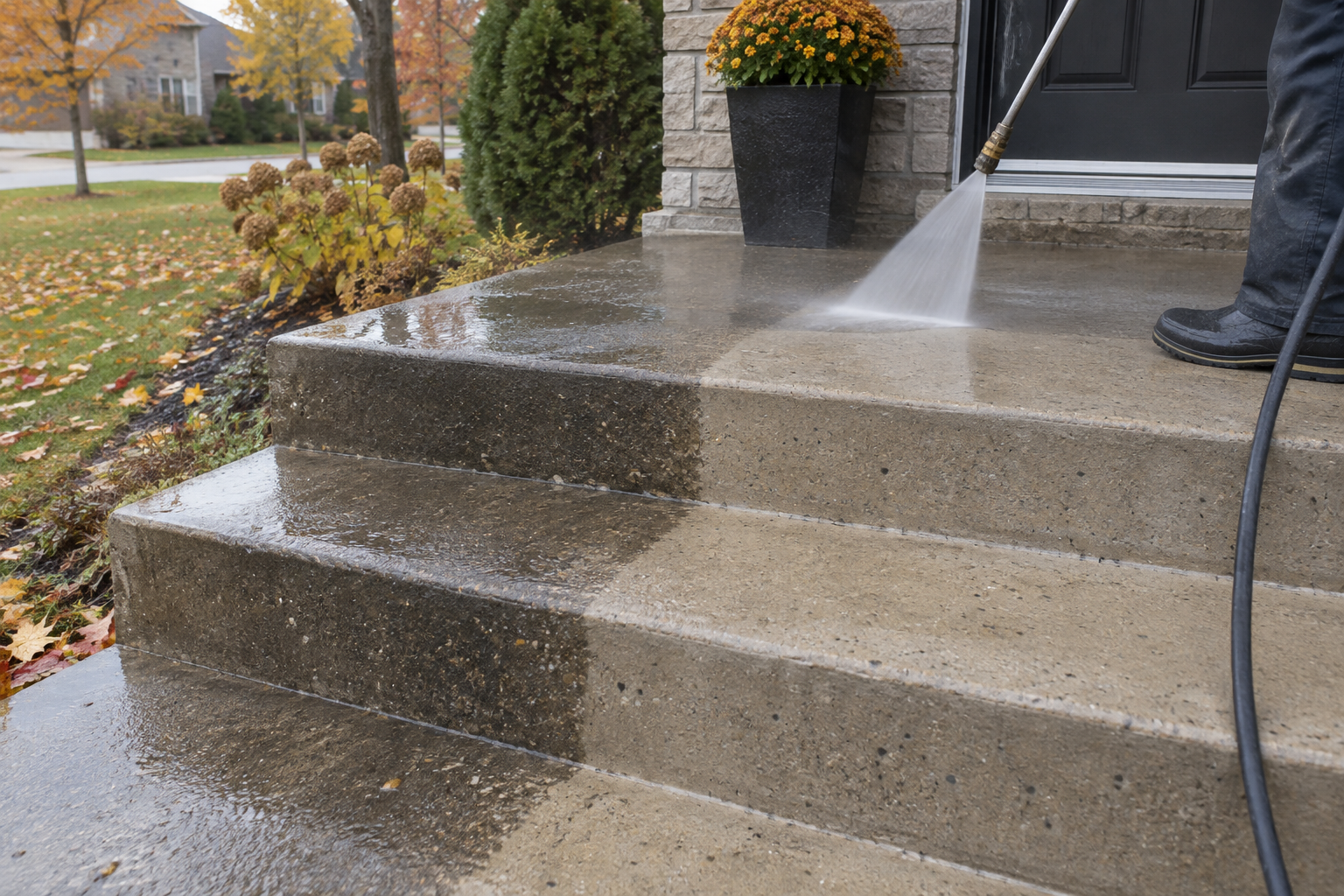
Are you seeing a similar situation?
Get a detailed evaluation adapted to the real configuration of your property.